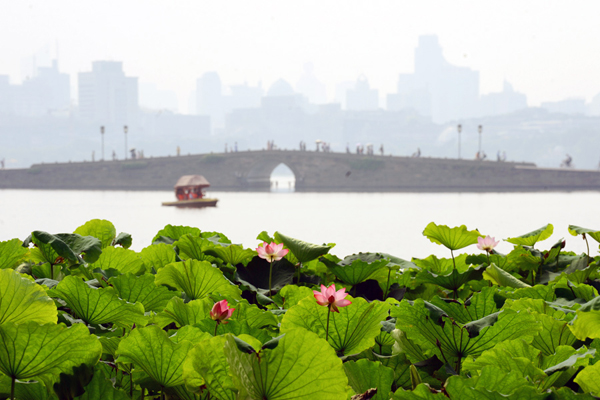
West Lake Cultural Landscape of Hangzhou
Introduction
The West Lake Cultural Landscape of Hangzhou, located in Zhejiang province in East China, is a mesmerizing example of the harmonious blend between nature and human artistry. This landscape encompasses the West Lake and the hills surrounding three of its sides, and it has been a source of inspiration for poets, scholars, and artists since the 9th century. Covering an area of approximately 6.39 square kilometers, the landscape stretches 2.8 kilometers from east to west and 3.2 kilometers from north to south. It is adorned with temples, pagodas, pavilions, gardens, ornamental trees, causeways, and artificial islands, crafted to enhance the natural beauty of the region west of Hangzhou and south of the Yangtze River. The West Lake Cultural Landscape not only exemplifies Chinese landscape aesthetics but also showcases the cultural tradition of landscape modification to reflect an idealized fusion between humanity and nature. This site was recognized as a UNESCO World Cultural Heritage site in 2011, further cementing its cultural and historical significance.
History
The historical evolution of the West Lake Cultural Landscape is deeply intertwined with the cultural and artistic advancements in China over the centuries. The origins of this landscape can be traced back to the 9th century, when it first began to captivate the imagination of poets and scholars. Significant modifications were made between the 9th and 12th centuries, which included the creation of the main artificial elements of the lake, such as two causeways and three islands. These features were developed through repeated dredging to improve and beautify the area.
During the Song Dynasty (960-1279) in the 13th century, the West Lake became further celebrated through the identification of ten poetically named scenic spots. These locations were designed to embody idealized landscapes that perfectly encapsulated the harmony between man and nature. The cultural ideals of the Tang (618-907) and Song dynasties, which emphasized the aesthetic fusion of natural and human-made elements, are strongly reflected in the West Lake's landscape.
The influence of the West Lake extended beyond China, significantly impacting garden design in Japan and Korea. Its ideals of landscape aesthetics, emphasizing harmony and the projection of emotions onto the landscape, were adopted and adapted in various regions, showcasing the cultural exchange and influence of Chinese landscape philosophy.
Cultural Significance
The cultural significance of the West Lake Cultural Landscape is profound, as it embodies the ideals of Chinese landscape aesthetics and serves as a symbol of the harmonious relationship between humans and nature. The landscape has inspired countless works of poetry, art, and literature, capturing the imagination of artists and scholars for centuries. The aesthetic principles reflected in the West Lake, such as the blending of natural and man-made elements and the projection of human emotions onto the landscape, have had a lasting impact on garden design both within China and abroad.
The influence of the West Lake is evident in the design of gardens in Japan and Korea, where the principles of landscape aesthetics introduced by the Chinese were adapted to suit local cultural contexts. The ideals of creating vistas that evoke emotional responses and reflect philosophical concepts of balance and harmony have been widely embraced and propagated, demonstrating the far-reaching impact of the West Lake's cultural heritage.
The West Lake is also associated with rich folklore and legends, adding to its cultural depth. Stories such as "The Legend of the White Snake" have become integral to Chinese cultural narratives, further enhancing the lake's reputation as a land of romance and mystery. This tale has been adapted into various art forms, including traditional operas and modern media, making the pagoda a cultural touchstone.
Tourism and Hot Spots
The West Lake Cultural Landscape is a major tourist attraction, drawing visitors from around the world who come to experience its breathtaking beauty and historical significance. The lake offers a multitude of scenic spots and attractions, each with its own unique charm and history.
One of the most iconic landmarks is the Leifeng Pagoda, originally constructed in 975. Although it collapsed in 1924, it was rebuilt in 2002 and remains a popular site due to its association with the "The Legend of the White Snake."
Visitors to the West Lake can also explore the ten poetically named scenic spots, each offering a distinct perspective of the landscape and a chance to experience the philosophy of harmony between man and nature. Pleasure boats on the lake provide an opportunity to admire the picturesque scenery from the water, while the Bai Causeway offers a leisurely walk through some of the most beautiful parts of the landscape.
The integration of natural beauty with cultural and historical elements makes the West Lake Cultural Landscape a must-visit destination for those seeking to experience the essence of Chinese landscape aesthetics and cultural heritage.








